Phase two (January to February 2026)
The conversation
The City of Melbourne wants everyone to be able to have their say on decisions that affect them or are of interest to them. We do this through community engagement.
We are currently reviewing our Community Engagement Policy (the policy) and developing staff guidelines to support improved practice.
In 2025, we sought community and stakeholder feedback to develop a draft updated policy. See phase one to learn what we heard of the policy and practice review.
The purpose of the second phase of engagement was to:
- share what we learnt through earlier engagement and how the policy has been revised in response
- invite feedback on the revised policy to test and refine prior to adoption
- reach out to under-represented groups, particularly businesses, multicultural communities, people with a disability and young people, and demonstrate different approaches to inform improvements to our practice.
Gathering insights
In phase two, we gathered feedback through 139 interactions, survey responses and submissions.
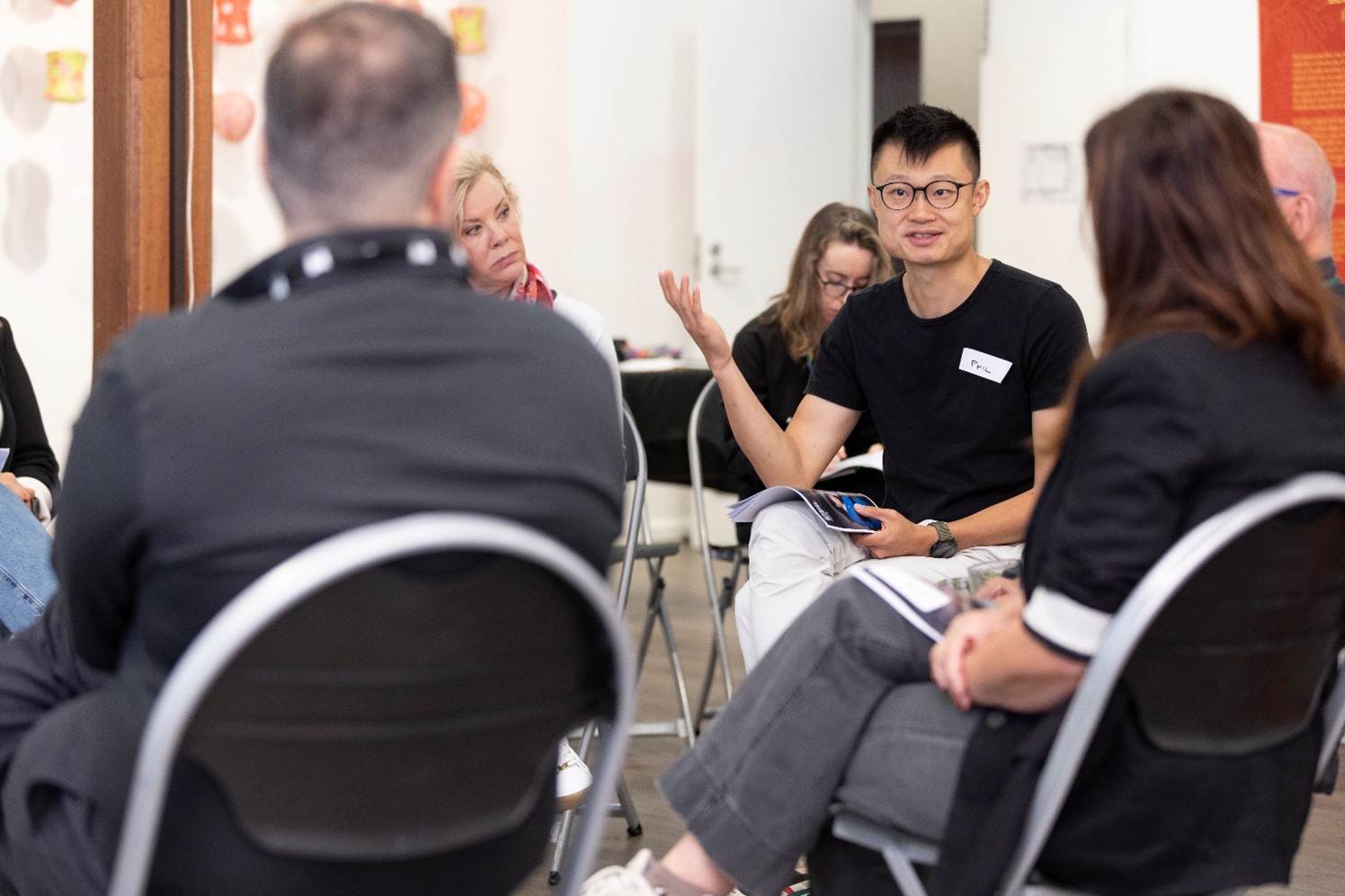
A mixed methods and targeted engagement design approach involved a survey, submissions, interactive workshops, focus groups and one-on-one interviews to gather rich data from community members who live, work, play and visit the City of Melbourne.
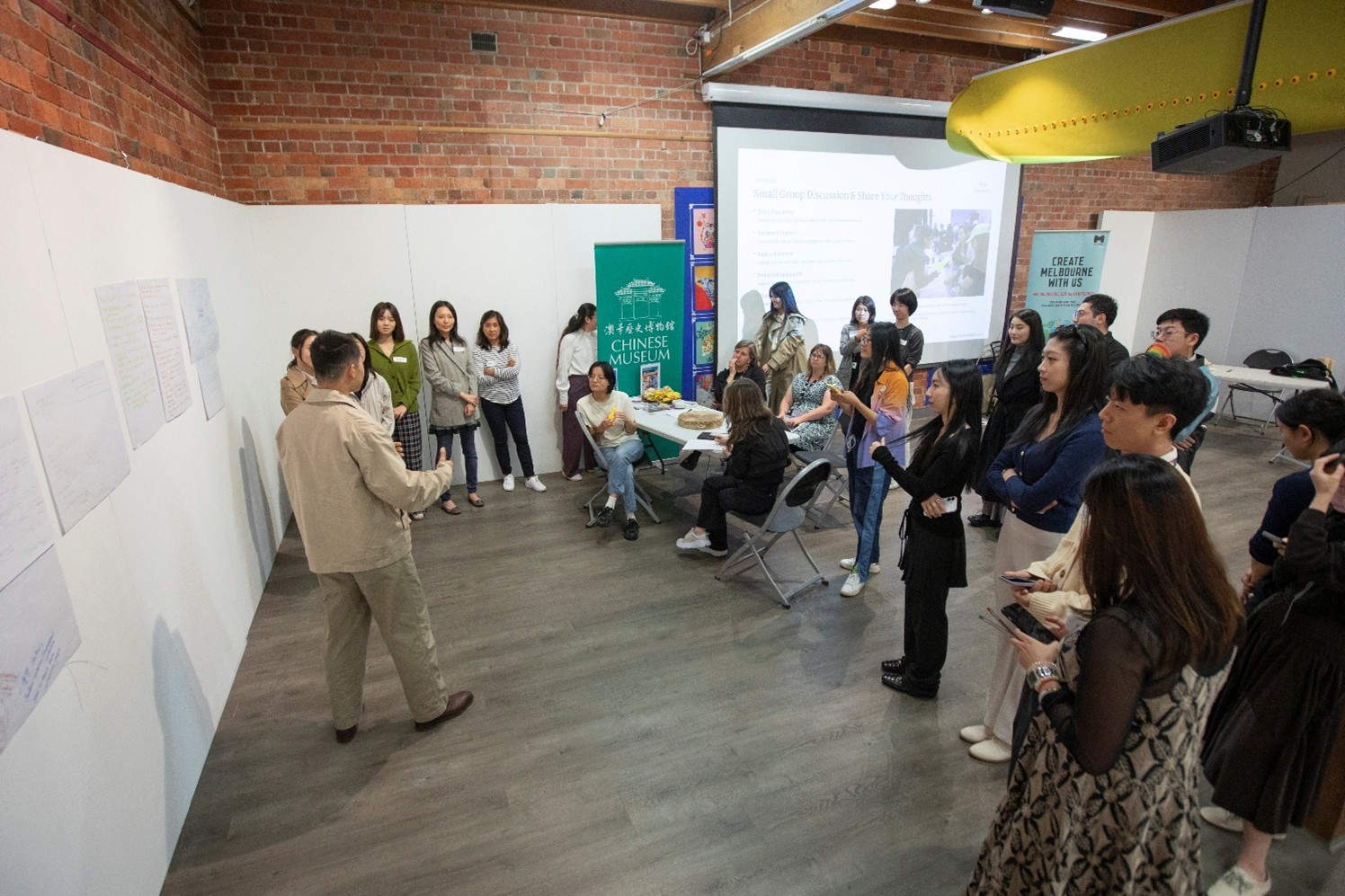
Expert facilitator Feifei guiding participants through an activity at a workshop for past and current Chinese International students


What we heard
We received feedback that relates directly to the policy via 8 submissions, 18 survey responses, a focus group with 4 members of City of Melbourne’s Disability Advisory Committee (DAC), and a meeting with a resident group (25 attendees).
Overall, participants who provided feedback on the policy support that the draft updated policy represents an improvement to the previous policy adopted in 2021. Feedback regarding strengths of the revised policy highlighted:
- greater alignment with what is important and
- the readability and understandability of the document.
Some participants also suggested targeted improvements, changes and additions to further strengthen the revised policy and help ensure this document provides a solid foundation for practice.
Recommendations identified by two or more feedback sources (e.g. submissions, survey participants, focus group discussion) encompass 8 main themes.
- include more details regarding practice in the policy document (overarching theme, 5 submissions)
- outline processes used to evaluate community engagement projects (2 submissions, DAC feedback)
- specify what information is shared when we close the loop (3 submissions, DAC feedback)
- expand on criteria used to decide when and when not to engage (2 submissions)
- expand on what methods could be used and criteria that will be applied to determine which methods must be used for each project (1 submission, DAC feedback)
- include a requirement in the policy to clearly articulate engagement negotiables and non-negotiables at commencement / what is in and out of scope of a consultation (2 submissions)
- strengthen inclusion and equity commitments in the policy (2 submissions, 1 survey participant)
- provide greater clarity regarding deliberative engagement (2 submissions, 1 survey participant).
We received feedback on how to improve community engagement practice at CoM through each of the 139 interactions, survey responses and submissions received during this phase of consultation.
Overarching theme: representative engagement requires tailored methods, transparent information sharing and trust
- Build reciprocal relationships and knowledge of what council does before asking for feedback. Council staff should be more visible and human. Prioritise ongoing conversations and move away from transactional requests for feedback.
- People who live, work, visit and play in CoM are diverse, so no one size fits all for communication or engagement methods.
- Inviting diverse voices into a conversation starts with tailored and targeted messaging, identifying the impact of a project or issue for each group (i.e. ‘what’s in it for me’), and use of multiple communication channels (preferrable channels community members already use such as WeChat and Business Precinct Association newsletters). Irrespective of the channel or audience, council should always be transparent and ‘tell it how it is’.
- Engagement methods should also be tailored and targeted to groups and levels of interest, providing options, going where people already (e.g. business site visits, community centers, English language classes, universities) and co-delivering with partners who the community trust (e.g. Neighbourhood Houses, facilitators with lived experience).
- Consistent updates and follow-through are crucial to relationships and trust.
- For the community, sharing what we heard and what we did as a result (known as closing the loop) is one of the most important phases of engagement. However, we heard this is where current practice often falls short. Updating CoM webpage is insufficient in isolation, and council should close the loop through multiple channels, preferably the method used to gather feedback. For example, if council staff gather feedback through an English class or individual stakeholder meeting, that same method should be used to close the loop.
Hearing diverse voices through this phase of consultation helps us understand how to realise tailored approaches to seeking feedback from different groups within the community.
Topics of interest
- “My four walls” and immediate or material operational issues, such as: safety, crime, cleanliness, amenity, construction works, disruptions and permits.
- Consultation overload: Businesses seeking fewer asks overall, and higher quality, more targeted engagement.
- Genuine opportunities for influence and recognising when council just needs to “do the thing”.
Communication
- Need for coordinated and direct communications from council to business.
- Clarity and transparency: “Tell us how it is".
- Clearly distinguish between levels of influence and participation from the outset.
- Use Business Precinct Association channels and networks.
Participation
- “Come to us”.
- Business Precinct Associations want to be used as trusted intermediaries.
- Targeted language support in multilingual precincts.
- Not closing the loop erodes trust: Regular updates are preferred (even if no decision has been made).
- Site visits.
- Attend existing Business Association meetings.
- Potential options for extending quarterly meetings that bring together council staff and all Business Precinct Associations.
Topics of interest
Neighbourhood House staff insights into user interests:
- social connection
- cohesion
- economic development
- volunteering opportunities.
International students:
- day-to-day survival
- cost of living
- public transport
- safety
- racism
- workplace rights
- entrepreneurship
- employability
- female empowerment
- civic participation
- volunteering
- free community spaces
- placemaking activation.
Communication
- Low awareness of council: communication strategies should start by building foundational knowledge of what council does.
- Council (and City of Melbourne community engagement) should be more visible in the community and ‘human’.
- Targeted messaging so everyone feels invited to get involved.
- Make content conversational and use storytelling technique.
- Digital access (e.g. council website and Participate Melbourne) is currently difficult.
- Print and in-person translation are key.
- Channels that audiences already use (e.g. WeChat) preferred to City of Melbourne channels.
Participation
- Engagement should be ongoing and seek to build relationships (rather than once off, transactional requests for feedback).
- Surveys can be effective, but not in isolation or instead of in-person methods.
- Collaborate and co-deliver with Neighbourhood Centres, peak bodies and social groups.
- Make in-person activities conversational and interactive.
- Value and incentivise participation and consider non-monetary incentives.
- Tailor closing the loop activities to audience and methods used to gather feedback.
- Go where people already are (e.g. universities, hospitality venues, Neighbourhood Centres).
Topics of interest
- Topics and projects that relate to physical accessibility and access (e.g. transport, footpaths, crossing the street, e-scooters, bike riders, safety as a pedestrian).
- The accessibility of built infrastructure (e.g. community centres, libraries).
- Digital accessibility.
- Safety.
- Cost of living issues.
- How people with a disability (including hidden disabilities) are represented in council policies, projects, services and other work.
Communication
- Keep the complexity of council systems, information and communication in mind when planning and delivering community engagement projects.
- Use plain language and ensure materials are inclusive of all disability types.
- Clarify decision-making and feedback pathways from the start.
Participation
- The City of Melbourne Disability Advisory Committee are seeking earlier and higher-level involvement, including genuine co-design.
- Meet people where they are and use networks to expand reach beyond those who seek out opportunities to have their say.
- Accessible and inclusive methods.
- Use trusted facilitators and community-led models.
- Incentivise and value lived experience participation as advisory level input.
- Close the loop in transparent and tailored ways to build trust.
- Above all: Build trust through consistency and respect.
Topics of interest
- Engagement often misaligns with youth values.
- Young people’s motivations for participating shifts frequently.
Communication
- Mix of online and in-person communications channels preferred over print.
- Hard to reach young people not already engaged in civics or youth networks and reliance on existing stakeholders can exclude new or diverse voices.
- Values-driven messaging and promotion presents opportunities.
- Limited reach to underrepresented young people not already connected.
Participation
- No one method preferred: Offering a variety of activities and options ideal.
- Systems and processes created by adults can unintentionally exclude young people.
- Incentives and remuneration to recognise time and expertise.
- Strategic partnerships to co-design projects and amplify youth voices.
- Inclusive design and delivery: “By us and for us” model.
Impact
The outcomes from this second phase of engagement were a key consideration in finalising the Community Engagement Policy (2026-2030) and will inform implementation of staff practice guidelines.
Examples of changes to the policy following feedback include:
- The accountable principle has been strengthened to specify standard communication channels in response to feedback on how reporting back to community will occur.
- Several changes have been made to the table under the heading ‘How we engage’ in the draft policy to align to the level of influence with example methods. This includes updating the description of Consultative and Deliberative engagement to ensure the level of influence is clear, and that Inform is situated in the context of sharing information about projects for community engagement. The list of project types has also been amended to provide clarity.
- The policy has been updated to strengthen the Impactful principle to identify and clearly communicate negotiables and non-negotiables. When applied in practice, projects will be assessed against this
- The policy has been updated with additional reference to resourcing inclusive engagement under the principles section.
- The definition of deliberative engagement has been updated to both align with Local Government Act (2020) requirements and allow for broader application. This also includes the Local Government Victoria description and linked reference to the source.
- Additional information has been added to ‘Using Community Engagement Results’ section of the policy to support clarity regarding Councillors agreeing to the level of influence that the results of an engagement will have prior to the engagement commencing. For example, deliberative engagement outcomes have a higher level of influence on Councillor decisions, and Councillors agree to this at the start of a process.
- Included the Community Engagement Team in the list of Roles and Responsibilities, to demonstrate organisational commitment to practice uplift.
Additionally, in response to the emphasis on practice and process in the feedback shared during this consultation, an overview of the policy implementation plan has been included in the final policy for adoption at the council meeting on 28 April 2026. The community engagement process at City of Melbourne will be published in the first quarter of the 2026-27 financial year. This additional documentation will support public visibility of how the policy will be operationalised and include:
- Practice improvements relating to evaluation of engagement as a key part of the community engagement process at City of Melbourne.
- A checklist of standard information to be shared to 'close the loop' and recommended channels for sharing.
Responding to the suggestion that the policy should expand on what methods could be used and criteria that will be applied to determine which methods must be used, the staff practice guidelines will also support determining the best method which involves a range of factors including project constraints. The focus of the policy is to support a principles-based approach (in line with the Local Government Act 2020) to design and deliver community engagement based on assessing impact, interest and influence.
Responding to the suggestion that the policy should expand on criteria used to decide when and when not to engage, implementation of the policy will include formalisation of governance and risk assessment processes.
Other feedback on practice shared during this consultation and observations related to the experience and preferences of community engagement will be used to inform practice guidelines, tools and resources for City of Melbourne staff. Specialist teams throughout City of Melbourne such as Aboriginal Melbourne, Youth Services, International Education and Economic Development will also provide input into the community engagement practice guidelines.
Next steps
The outcomes from this second phase of engagement were a key consideration in finalising the Community Engagement Policy (2026-2030) and will inform implementation of staff practice guidelines.
The final document was endorsed by Council on 26 May 2026. Read the endorsed Community Engagement Policy.
Read the engagement report


Phase one (August to September 2025)
The conversation
The City of Melbourne is updating its Community Engagement Policy to make it easier for the community to get involved and for staff to plan and run engagement activities effectively.
In Phase One, we:
- Spoke the community members about what works and what doesn’t.
- Looked at how people currently experience engagement with us.
- Found ways to make engagement clearer, more consistent and easier for everyone.
These findings will help create a draft policy and guide, which will be shared for more feedback in early 2026.
Gathering insights
Phase one included 179 surveys (including 80 intercept surveys across 8 locations).
Of those participants:
- 59% residents
- 15% visitors
- 9% workers
- 5% students
- 29% speak a language other than English at home
- 3% were Aboriginal and Torres Strait Islander
- 14% were part of the LGBTQIA+ community
- 4 were local businesses
- 18% were under 30 years old
- 46% were born overseas
- 13% identified as having a disability
What we heard
- Build trust and accountability: Genuine engagement and feedback should visibly influence decisions to build trust.
- Close the loop: Clearly show how community input influences decisions.
- Support informed participation: Use plain language, visuals, and diverse formats.
- Be inclusive: Offer flexible, culturally appropriate engagement options.
- Improve communication: Before, during and after engagement.
- Recognise varied motivations: People engage for different reasons (e.g. connection, incentives, civic interest).
- Staff interactions are generally positive and appreciated.
- Online surveys are a preferred method for many.
- A wide range of engagement activities are offered.
- Some communities feel heard and see genuine opportunities to contribute.
- Transparency: Show how feedback informs decisions.
- Representation: Ensure participants reflect the diversity of City of Melbourne.
- Trust: Address perceptions of tokenism or predetermined outcomes.
- Awareness: Many people don't hear about opportunities to engage.
- Timing: Avoid short consultation windows and later-stage engagement.
- Inclusive practices: Increased resources and training to boost engagement.
- Motivations vary by topic and values.
- Prefer online surveys but value in-person workshops for connection.
- Want to co-design engagement processes.
- Need better awareness via youth networks and social media.
- Limited understanding of the City of Melbourne’s role and engagement opportunities.
- Prefer trusted channels like WhatsApp and university networks.
- Need clear messaging on benefits of participation.
- Low engagement due to time constraints, low trust and unclear relevance.
- Prefer direct, tailored approaches over generic surveys.
- Need better understanding of their preferred engagement methods.
- Desire for partnership in engagement design and delivery.
- Emphasis on restoring trust and valuing community-led work.
- Need for inclusive, culturally competent and accessible methods.
Examples of what we heard
Impact
Drawing on feedback from this phase of community consultation, the updated policy focused on providing more transparency and accountability for how engagement is planned, delivered and reported on.
The policy also defined when, how and with whom we engage and integrated this into a revised spectrum of participation. Additional learnings and insights were integrated into the development of a practice framework.
Next steps
Phase Two of community engagement on the draft policy:
- Presented the draft policy for feedback.
- Focused on hearing from underrepresented groups from Phase One, including young people and businesses.
Read the engagement report
Pre-engagement insights
From 2024 to 2025 the City of Melbourne ran more than 50 community engagement consultations, hearing from more than 10,000 people. We are proud of our community engagement but also know that we can improve.
We are particularly interested in ways to increase participation from young people, people born overseas, people who speak a language other than English at home and business owners. We are also interested in how we can make our community engagement processes more transparent – so you feel well informed and can see how your feedback is used in Council decision making.
What we've heard so far
Our 2021 Community Engagement Policy outlines our commitment and approach to community engagement. It was developed in 2020 and endorsed in 2021. About 1,200 people shared feedback to help inform this policy, but a lot has changed since then and we are keen to hear what is still working well and what needs a refresh.
To ensure the 2025 Community Engagement Policy and Practice review builds on what we already know, we have reviewed a range of information:
- Our operational data, including our participant numbers and demographics.
- Participate Melbourne website analytics.
- Community feedback gathered through a range of engagements, including the 2024 Neighbourhood Survey and the 2020 Community Engagement Policy consultation.
- Feedback from participants at the M2050 Summit, the M2050 People’s Panel and the People’s Panel on Affordable Housing.
- The 2025 Community Satisfaction Survey.
Select each spot to hear quotes from the community.

Who we often hear from
- As a capital city, our community includes residents, workers, visitors, students and business owners. Overall, we hear from business owners less frequently than people in the other groups.
- Our resident population is relatively young and multicultural when compared with other municipalities, but people who participate in our engagements don’t always reflect this.
How people like to engage
- Community have told us they want lots of different ways to participate, based on what suits them.
- Many people prefer online surveys because they allow them to quickly share feedback when it suits them. Some people prefer in-person activities to hear from, and connect with, other people.
- Feedback from the People's Panels for M2050 and Affordable Housing show more in-depth activities can increase trust and confidence in the City of Melbourne.
What makes it hard to engage
Community have told us there are several things that can make it harder for them to participate:
- not being aware of opportunities
- limited time – particularly for business owners, workers and those with caregiving responsibilities
- not feeling welcome or included
- finding the information hard to understand
- language barriers
- not feeling confident – either speaking in person or using technology
- not feeling like feedback will make a difference.